
Оценка и ръководство за качество на фабриката за буркани за крем по поръчка
Съдържание
Въведение
The bottle is no longer an object for drinking.
It is a component of a thing.
In the case of skin care products, it’s important because a lotion bottle needs to do more than just protect the product, it needs to provide the appropriate dispensing experience, make a trans-oceanic journey and impart value on the shelf.
The marketplace is becoming even less tolerant.
A buyer who used to buy suppliers primarily based on the bottle price is now faced with additional factors to take into account such as glass weight, pump compatibility, percentage of bottle recycled content, bottle refillability, decoration, MOQ, lead time and export packing box.
Hence, the glass lotion bottle exporter is undergoing a change.
The best suppliers are no longer competing just on catalogue width. They’re fighting it out over how to transform a specification into repeatable production.
What Are The Glass Lotion Bottle Trends?
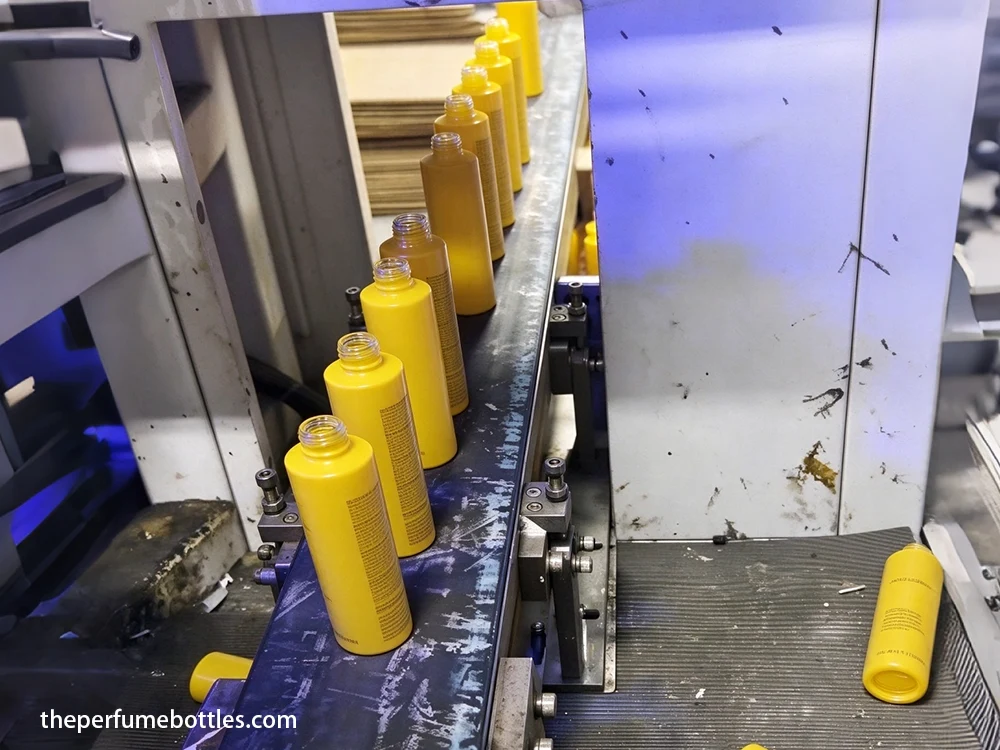
Lightweight glass, refillable systems, recycled glass, unique surface decoration, a reduction in premium formats and better compatibility between bottle and dispensing system are emerging trends in premium skin care and personal-care packaging.
That is the direction that industry reports support now. Sustainability, refill systems, circular design, functionality, personalisation, and premium glass are key trends influencing beauty packaging, according to Mintel’s 2026 beauty-packaging analysis. It also points out that usability remains a key factor for consumers, so that sustainability should not be a substitute for it.
That is the uncomfortable part.
A beautiful bottle that leaks is still a bad package.
Lightweight Glass Is Becoming a Procurement Issue
Glass has an obvious advantage: premium tactile quality.
It also has an obvious disadvantage.
Weight.
When exporting thousands of bottles to foreign countries, weight makes a significant impact in logistics. When it comes down to 20g per bottle, it’s a small amount until the order gets to 100,000 units.
20g × 100,000 = 2,000kg.
Two metric tonnes.
Hence, the focus on lightweighting is now shifting from being just about cost cutting to an engineering challenge.
Currently, the glass packaging industry is in the process of identifying lightweighting as one of the biggest sustainability trends, and in 2026, cosmetic packaging reporting is focusing on both thinner and lighter glass designs and on structural integrity and shipping performance.
The best glass lotion bottle exporter should therefore be able to discuss more than nominal bottle weight.
Попитайте за:
- Толерантност към тегло
- Wall-thickness distribution
- Base stability
- Neck strength
- Impact performance
- Съвместимост с линията за пълнене
- Carton protection
- Breakage during export
A lighter bottle that creates more breakage is not lightweighting.
It is false economy.
Може да се пълни отново Стъклени бутилки за лосион Are Coming Off The Luxury Marketing
Once refillable packaging was a luxury concept that was niche.
Getting to be more feasible.
A refill system can be used to enable a brand to keep a high quality outer glass container and only change the product being used in the container. This alters the economics of the packaging system and can lead to a longer life for the primary container.
Refill systems and circular design are key themes of beauty packaging identified by Mintel’s 2026 packaging analysis and adoption is notably different across markets due to logistical and cost pressures of refill systems.
That caveat matters.
Refillable does not automatically mean commercially superior.
The refill needs to fit.
The outer bottle needs to survive repeated handling.
The dispensing system needs to remain reliable.
The consumer needs to understand how to replace the refill.
For B2B buyers, the question should therefore be:
Can the exporter supply a refillable packaging system that works commercially, not merely a bottle that looks refillable?
PCR Glass Is Becoming More Specific
“Eco glass” is too vague for a serious purchasing specification.
Buyers increasingly need numbers.
For example, a September 2026 beauty-packaging launch from Somang Glass promoted козметични бутилки and jars using 60% post-consumer recycled glass, supported by GRS certification.
That is a much stronger procurement statement than simply saying “sustainable glass.”
The distinction is important.
A B2B buyer should ask:
What percentage of PCR glass is included?
Then:
How is that percentage documented?
And:
Does the recycled content affect color, clarity, strength, decoration, or minimum order requirements?
PCR content can become a commercial specification rather than a marketing adjective.
Glass Lotion Bottle Trend Comparison
| Trend | What Is Changing | B2B Benefit | Main Procurement Risk |
| Lightweight glass | Less glass per bottle | Lower material and logistics weight | Reduced durability if poorly engineered |
| Refillable packaging | Outer bottle reused with refill | Longer packaging lifecycle | Component compatibility |
| PCR glass | Higher recycled-glass content | Stronger sustainability credentials | Color and supply consistency |
| Premium decoration | Frosting, coating, printing, hot stamping | Stronger brand differentiation | Finish consistency |
| Small premium formats | More compact skincare packaging | Higher perceived value per ml | Higher unit and decoration costs |
| Integrated dispensing | Bottle and pump designed together | Better user experience | More complex sourcing |
Decoration Is Becoming More Sophisticated
Clear glass is still useful.
But it is no longer the only premium option.
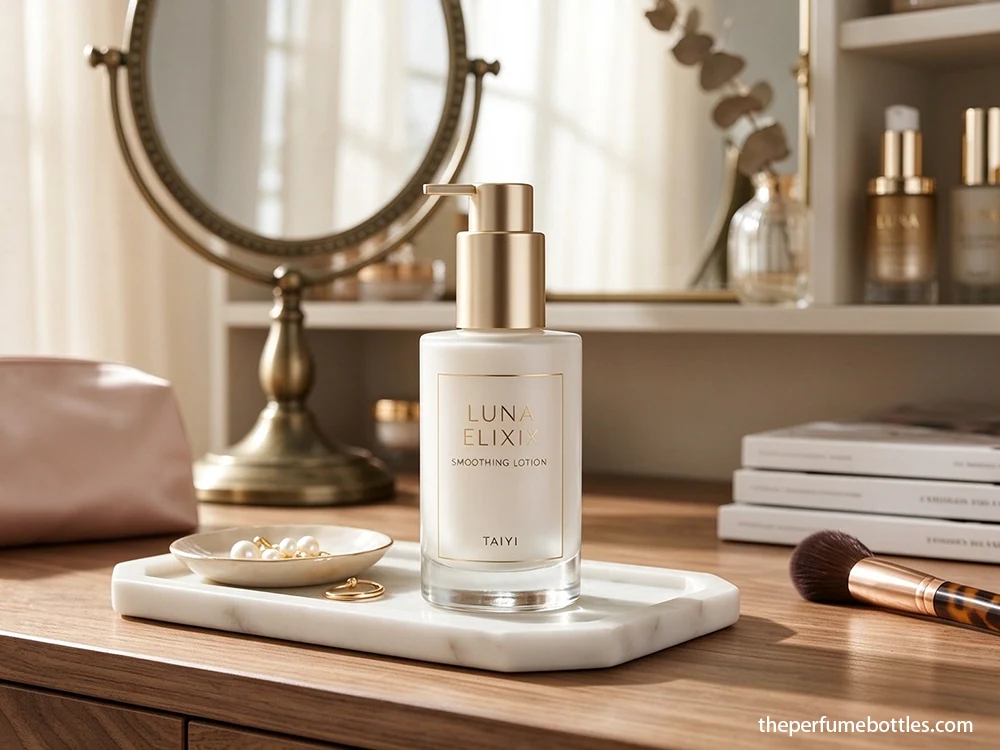
Today, cosmetic-glass suppliers are providing their customers with frosting, spraying, color coating, screen printing, hot stamping, PVD, gradient, embossing, and various other finishes.
That is because…
Brands wish the bottle to be recognisable before the customer reads the label.
The 100mls bottle with frost will have different communication with a clear high flint bottle. A deep amber finish implies something else all together. The use of a metallic logo can alter the perception of an off-the-shelf bottle.
However, there is a second production problem with decoration, that of repeatability.
A sample that is perfect doesn’t tell much about a production of 50,000 pieces!
The buyer should request:
- Color tolerance
- Decoration tolerance
- Print adhesion testing
- Surface inspection standards
- Sample approval procedure
- Batch inspection method
- Класификация на дефектите
The supplier’s ability to reproduce the same finish matters more than its ability to produce one beautiful sample.
Pump Compatibility Is Part Of Bottle Sourcing
A lotion bottle is not just glass.
It’s a dispensing system.
The pump works with the neck finish, dip tube, actuator, collar, bottle shoulder and formulation. When one part is altered but not the rest, the resulting product may act differently.
It’s especially critical if brands purchase bottles and pumps from different manufacturers.
The size of the bottle can be 30ml.
The pump can be used for approximately 30ml.
That does not mean that it will necessarily fit.
The dimensions of the thread, finish on the neck, gasket configuration, length of dip-tube, collar dimensions and sealing performance are also yet to be confirmed.
The B2B glass packaging supplier should be able to offer technical drawings or specifications for neck and assist the buyer in validating the pump chosen.
Premium Skincare Is Supporting More Specialized Glass Formats
The standard 100ml lotion bottle is not disappearing.
But it is being joined by smaller and more specialized formats.
Industry market reporting indicates that the 50–100ml segment remains particularly important in glass cosmetic packaging, while compact premium formats are also gaining attention for high-value skincare products.
Защо?
Because high-value formulations do not necessarily need large containers.
Serums.
Eye treatments.
Facial oils.
Concentrated lotions.
Travel formats.
Miniature product sets.
The increased costs of packaging could be warranted in these categories since packaging is a smaller portion of the perceived value of the product.
This provides a chance for wholesale glass lotion bottles suppliers that can provide various sizes and capacities, yet maintain a consistent family of bottles.
The Bottle Families Are Moving Towards Customization
It’s here that savvy exporters can put buyers in the money.
A brand can develop a shared packaging platform, rather than build one new bottle for each new product.
Например:
30ml → serum
50ml → treatment lotion
100ml → daily lotion
150ml → body lotion
The four bottles can share visual language while varying capacity and proportions.
That creates stronger shelf consistency.
It can also simplify procurement.
But the manufacturer needs to engineer the range rather than simply resize the artwork.
Any good best glass lotion bottle exporter should be able to explain whether there is any possibility of adapting an existing mould, if a new mould is needed and the impact that various capacities have on glass distribution and stability.
What Should Buyers Compare When Choosing an Exporter?
Only Price (one line) in quotation
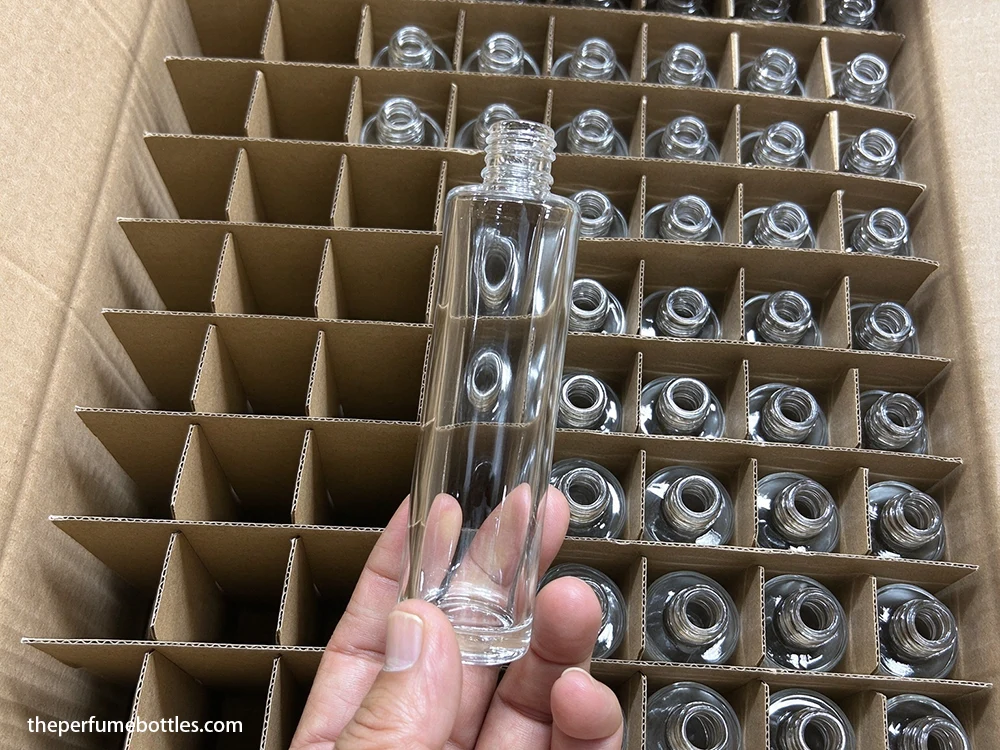
When selecting a supplier, the manufacturing capacity, customization options, QC, matching components, MOQ, export packaging, and documentation should be considered.
The cost of a supplier who prices at $0.20 per bottle may not cover the additional costs of breakage, varying decoration, lead time, or different pumps.
That is why landed cost matters.
Not catalogue cost.
| Supplier Factor | Основен доставчик | Export-Oriented Manufacturer |
| Stock bottle range | Налично | Налично |
| Custom bottle development | Ограничено | Обикновено налично |
| Mould development | May outsource | Can coordinate directly |
| Pump matching | Основни | Technical compatibility support |
| Декорация | Стандартен | Multiple finishing options |
| PCR/recycled-content options | May be limited | More specification-driven |
| Документация за контрол на качеството | Основни | More detailed |
| Експортна опаковка | Стандартен | Designed for international transport |
| Гъвкавост на минималното количество (MOQ) | Варира | Depends on production model |
| B2B development support | Ограничено | Sampling and specification support |
Global Exporters Are Facing a More Complicated Regulatory Environment
Packaging regulations are becoming part of product development.
The Packaging and Packaging Waste Regulation (EU) 2025/40 came into force in February 2025, and will apply as of August 12, 2026. It has sustainability and recyclability requirements, waste prevention and circularity requirements in its framework.
This translates to greater pressure on exporters to European cosmetic brands to link sustainability claims to tangible packaging parameters.
It’s very easy to see in practice.
Do not ask a supplier:
“Is this bottle eco-friendly?”
Попитайте:
“What is the bottle weight?”
“What is the recycled-glass percentage?”
“Which components are recyclable?”
“What documentation supports the material claim?”
“Can the packaging configuration meet the requirements of our target market?”
The questions produce useful procurement data.
How to Choose a Glass Lotion Bottle Exporter
In my opinion, there will be 5 stages to evaluate an exporter.
First: manufacturing capability.
Does the supplier have the capability to manufacture the bottle or is it just a reseller?
Second: customization.
Does it create moulds, colors, finishes, decorations and families of bottles?
Third: dispensing compatibility.
Is it able to sync the pump and bottle as one, or is it just a pump and a bottle?
Fourth: quality control.
Is it able to prove inspection requirements and repeatability of batches?
Fifth: export execution.
Does it have the ability to safeguard the bottles during international transport and provide proper documentation?
This 5th point is often overlooked.
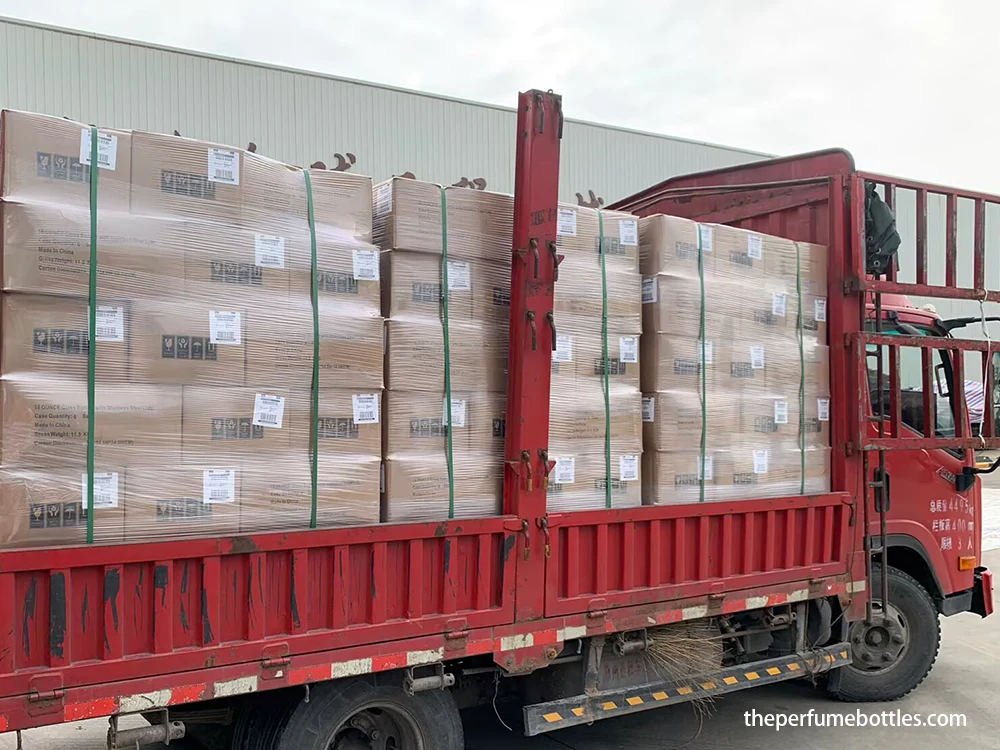
A perfect bottle that arrives with 3% breakage is not a successful packaging project.
What Leading Exporters Are Really Competing On
The industry is not simply moving toward “more beautiful bottles.”
It is moving toward better-defined packaging systems.
Lightweighting.
PCR content.
Refillability.
Pump compatibility.
Premium finishing.
Small-batch customization.
Export reliability.
Regulatory documentation.
These trends overlap.
Lighter bottles lead to lower material and logistics weight. A reusable design alters the product life cycle. The material specification is changed for PCR glass. Decoration enhances brand identity. The user experience can be enhanced with integrated dispensing.
The difficulty is to get them all going at once.
The manufacturer is where that comes into play.
Често задавани въпроси
What are the main glass lotion bottle trends?
Heavier the bottle, the more visually appealing it will look, but for the most part, it is the lightweight and recyclable glass bottles that are the big trends in the main glass lotion bottle market. The most popular trend is the use of recycled or PCR glass bottles, while the next is the improved decoration of the glass. The smaller, higher value sizes, as well as the close integration between the glass bottles and dispensing pumps, are also rising in popularity. These are more and more related to material efficiency, brand differentiation, logistics and regulations for B2B buyers.
Why are cosmetic brands opting for lightweight glass lotion bottles?
Lotion bottles are lightweight glass containers that cosmetic companies select in order to cut down on the amount of packaging materials used, the weight of the bottles during shipping, and packaging costs—the cost of packaging is the premiums that glass bottles carry. Nevertheless, lightweighting needs to be verified and have to meet impact resistance, wall distribution, base stability, filling requirements, and international transport criteria.
What is PCR glass in lotion bottles?
The glass packaging material that contains post-consumer recycles glass (PCR glass) is the glass packaging material that contains post-consumer recycles glass. Percentages may vary from supplier to supplier and project to project. There is a difference between claiming that the glass is “eco-friendly” or “sustainable packaging” and specifying a certain PCR percentage and the necessary supporting documentation.
Would reusable glass lotion bottles be viable in the marketplace?
The design of a refillable glass lotion bottle may be commercially viable when the outer bottle, refill part, pump, sealing device and the process of replacing the outer bottle are integrated with each other and with the process of use by consumers. The biggest challenge is in trade-offs on sustainability benefits and cost of components, logistics, compatibility, hygiene and convenience to the consumer.
How to select the glass lotion bottle exporter?
When selecting a glass lotion bottle exporter, you should consider manufacturing capacity, mould development, bottle specifications, pump compatibility, decoration, QC, MOQ, export packaging, lead time, document and customization support. The lowest bottle price is not enough to judge because there may be high logistics failures and quality failures that can increase the total landed cost.
Which glass lotion bottle is the most suitable size for skin care bottles?
While there is no one right answer as to size, it is dependent on various factors including the formulation, frequency of use, retail location, distribution system, and product category. Usual commercial sizes are 30ml, 50ml, 100ml or 150ml, and high quality commercials may have custom sizes too.