
Bagaimana Produsen Botol Parfum Kaca Mendorong Diferensiasi Merek
Daftar isi
Temukan bagaimana produsen botol parfum kaca terkemuka membantu merek pasar massal menonjol
Sleek, Minimalist, Cylindrical
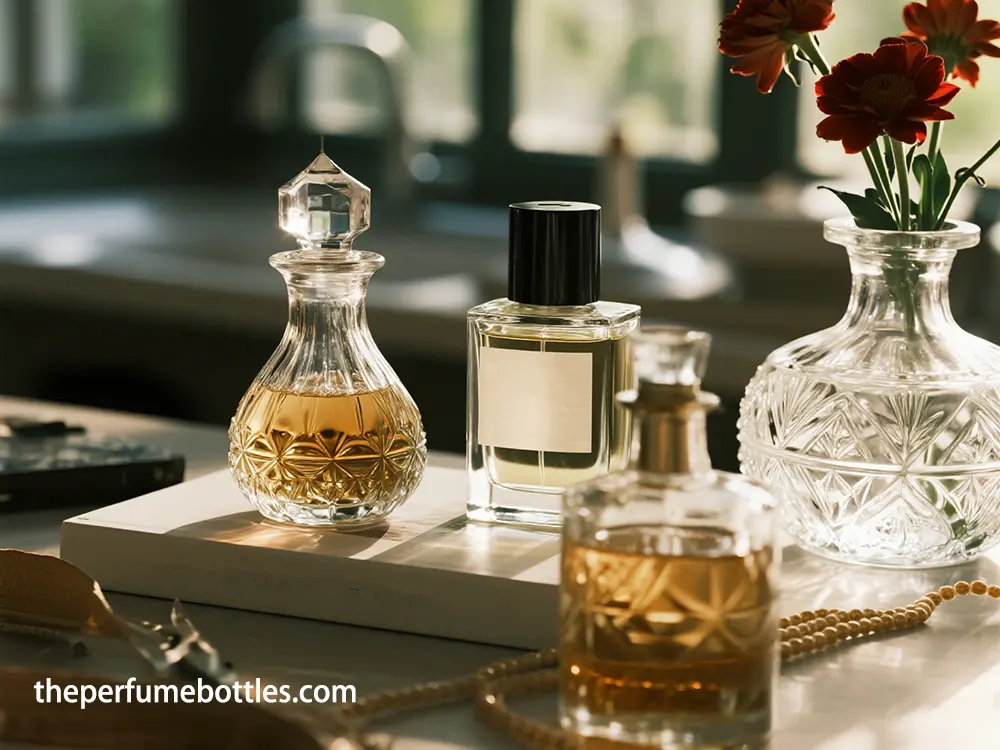
(e.g., Jo Malone, Byredo) are all modern, simple and versatile which is why they are suitable for contemporary and unisex fragrances. botol parfum kaca (e.g., Thierry Mugler’s “Angel” star, Moschino’s “Toy” teddy bear, Carolina Herrera’s high-heel) express loud ideas, reflect the person’s uniqueness and become one of the very few that people can easily remember thus raising recall by more than 30%.
Tall and slender
bottles are elegant;
Dapatkan Sampel Gratis
convey strength.
3.2. The Psychology of Color and Finish
Colour psychology corresponds to the scent character and the potential consumer.
Warm colors
(Red, Orange, Yellow) bring about the feeling of being energetic.
Cool colors
- (Blue, Green) give the impression of being relaxing. Neutral colors
- (Black, White) are the ones that express being classy. Pink
- is indicative of love; Metallic tones
- (Gold, Silver) give the impression of being luxurious.Gradient/two-tone designs
- Pencetakan UV: Even the colour of a bottle can change the way a person smells a scent.
- Cetak Bantalan: 3.3. Connecting with Target Demographics
- Ukiran Laser: Women Consumers:
- Pelapisan Vakum (Metalisasi): Younger Generations (Gen Z, Millennials):
- Desire personalized, authentic, and customized scents that represent their values (e.g., ethical sourcing). They are willing to pay more for unique, visually attractive, and “Instagram-worthy” products that lead to social media engagement.The design of the packaging mirrors the cultural values; for example, Middle Eastern markets are characterized by the use of vibrant gold and complex patterns, whereas the Asian designs are more focused on the simplicity.
- 3.4. Beyond Aesthetics: Ergonomics and Interactive Elements Functionality and user experience are indispensable. Malfunction of the cap sealing, hard-to-use nozzles, or awkward shapes, all are factors that lower the satisfaction level of users. Packaging has to not only protect the product but also be of simple use (ergonomics, grip, size, capacity).
Interactive components such as QR codes, NFC tags, and AR features enrich the unboxing experience, offer product information, and get the users involved, thus making the packaging “Instagram-worthy”.
4. Optimizing Value: Cost Implications and ROI of Mass-Market Customization
Custom glass perfume bottle investments entail balancing one-of-a-kind features with reasonable prices. The return of investment (ROI) goes beyond sales to include brand equity and loyalty.
4.1. Cost Components and Economies of Scale
Costs are affected by :
Mold Creation:
The main barrier is the initial investment and it is usually in the range of $3,000-$10,000+ for a complicated design and can be up to a maximum of $50,000.
Raw Materials:
Botol wewangian Energy Consumption:
- Most of the energy, i.e., 70% of it, is used for melting/refining and thus, it accounts for 20-30% of the total production costs. Labor Costs:
- 0.50-2/ bottle for assembly, QC, packing, which stands for 40-70% of the total production. Also, lower labor cost regions are cutting down labor costs of their business partners. Standard decoration 0.10-0.50/bottle; complicated details $0.50-$2; extremely customized services $75+.
- Logistics/Packaging: Shipping 0.02-0.10/unit; outer packaging 0.50-10+.
- That is the reason why achieving Economies of scale
- is so important. The cost per unit decreases drastically with the volume. While small batches are priced at 5-10/unit; large-scale production costs 1-3/bottle.Fully custom designs usually have high minimum order quantities (MOQs), most times 10,000+ units, with some factories requiring 50,000-300,000 units for a minimum economic viability. Stock decorating is more convenient for startups, since there is no mold fee and lower MOQs (500-3,000 units), thus the financial risk of market testing is minimized. 4.2. Measuring the Return on Investment (ROI) Custom packaging is a planned business move that brings a lot of profit:
Consumer Influence:
Most of the time (72%) consumers are using packaging as the main decision criterion on what product to buy; about 60% of them are avoiding unattractive packaging.
- Brand Recall/Recognition: It helps to remember the brand by 58% (Nielsen, 2023), thus creating a unique icon.
- Perceived Value/Premium Pricing: One of the biggest advantages is the ability to elevate the perceived value level, and thus, to be able to charge the consumers higher prices. Consumers are willing to pay up to 35% more for high-quality packaging.
- Direct Sales Uplift: Custom packaging may lead to an increase in sales by up to 40% and in-store sales by 30% (NielsenIQ). Aesthetic bottles lead to 25% more consumers’ purchasing intentions.
- Strategic Differentiation: A requisite for survival in a market which is expected to reach $35 billion by 2030. Brand Loyalty/Emotional Connection: Through love for a brand, the happy customer will voluntarily generate repeated buying.
- Sustainability as Value Driver: 52% of consumers opt for environmentally-friendly brands; eco-friendly communication accounts for 28% sales increase (McKinsey, 2023).
- Protection Against Counterfeiting:
Harder to imitate uniquely crafted custom shapes.
Operational Efficiency:
Helps in freeing the company of the costly cycle of damaged goods and the associated expenses.
- “Unboxing Experience”: Mutual communication between involved parties facilitated by social media, at the highest level possible, and being talk-of-the-town marketing.
- Key Performance Indicators (KPIs) comprise sales, customer satisfaction, brand perception, operational efficiency, engagement, and return rates. Besides, brand recall and customer lifetime value are of great importance as well.Financial modeling (time series, multiple linear regression) is one of the ways of ROI forecasting.5. Sustainable Solutions: Eco-Conscious Customization for Mass-Market Appeal
- Nuansa Budaya: 5.1. Recycled Content and Lightweighting
The use of Post-Consumer Recycled (PCR) glass is a trend in the industry to lower the carbon footprint and the demand for virgin materials. Some companies have achieved up to 60% PCR, while L’Occitane is using 100%. The EU average for recycled content was 52% in 2021.
The reduction of glass without the sacrifice of strength or appearance brings both environmental and economic advantages: less use of raw material, lower production/transport costs, and fewer CO2 emissions. Today, bottles are 30% lighter than those of 20 years ago, and there are 70% fewer CO2 emissions than 50 years ago. Borosilicate glass is helping to have thinner and at the same time durable walls.
5.2. Refillable Systems and Consumer Adoption
Dapatkan Sampel Gratis
Consumer adoption, however, remains low (<1% in a 2023 survey) even though 79.3% of the respondents consider sustainability to be important. Barriers to sustainability include the higher initial costs of sustainable products, concerns about contamination, scepticism regarding the environmental benefits, limited availability of brands, and hesitation to make a change. On the other hand, adoption will increase if there will be a clear environmental demonstration (34%) and if the favorite brand will participate (43%). People prefer refill stations for bulk purchases.
5.3. Certifications and Regulatory Frameworks
Certifications driving sustainability:
Cradle to Cradle Certified™:
- Assessment includes material health, material reutilization, water stewardship, energy from renewable sources, and social fairness.Acknowledges excellent social and environmental performance.
- Ecocert Certification:Certifies organic/natural cosmetics with very strict criteria for ingredients, production, and packaging.
- EcoVadis Ratings: Covers environmental, labor and human rights, business ethics and sustainable procurement aspects.
- Global Recycled Standard (GRS):Provides evidence for the recycled content and supply chain practices.
- Dekorasi/Finishing:For the outer packaging made from wood from responsibly managed forests.
- The EU regulations, such as the Packaging and Packaging Waste Regulation (PPWR) (mid-2026), require a harmonized reuse system, deposit return schemes, and packaging that can be recycled by 2030. It also specifies waste reduction targets (5% by 2030, 10% by 2035, 15% by 2040), reduces “substances of concern,” and implements Extended Producer Responsibility (EPR). 5.4. Consumer Willingness to Pay for Sustainable Packaging
Most consumers will pay more for sustainable packaging. As per the Trivium Packaging’s 2023 report, 82% of consumers would pay more, which is an increase from the previous years.Consumers are ready to pay 16% more for a packaging that is partly made of paper.63% of the respondents say that for the refillable beauty products they would expect 10-20% of the price to be saved to encourage the purchase of such products.Younger consumers and high earners are especially concerned and willing to pay more. Suggested Solutions for Sustainable Customization: Enhance Refill Experience:
Easy-to-use, spill-free devices; clear instructions; “smart packaging”.
Strategic Pricing/Value Communication:
On the one hand, long-term savings can be brought to attention; on the other hand, tiered pricing (e.g., 10-20% cheaper refills) can be offered.
- Improve Availability/Visibility: Make products more accessible to a wider audience; clear in-store signage.
- Strengthen Marketing/Transparency: Communicating the environmental benefits of the product in a clear way; use “eco-labels” to facilitate trust and counter “greenwashing”.
- Address Aesthetic/Quality Perceptions: Create environmentally friendly packaging that keeps the product luxurious and visually appealing and is also appropriate for social media.
- Overcome Attitude-Behavior Gap: Provide consumers with the options to make sustainable choices that are convenient, affordable, and aesthetically pleasing.
- 6. Future Horizons: Innovations in Mass-Market Perfume Bottle Customization The future of mass-market perfume bottle customization is influenced by progressive technologies, sophisticated materials, and the changing needs for personalization and eco-friendliness.
- 6.1. How Glass Perfume Bottles Manufacturers Use AI for Design and Hyper-Personalization AI reinvent packaging design by looking at trends and demographics to figure out the layout, color, and pictures that fit best, thus, the designing part becomes easier.Procedures such as DesignNBuy give access to AI design instruments, which help in live modification and result-demanding printing.Packify.ai creates images of the products and gets the ideas from the user’s instruction, thus the whole designing process is done quickly.AI tools like Fragrance Innovator function as the source of inspiration for creative bottle designs, and the input may come from a variety of different fields.Having this technology at hand, one could easily imagine very seldom use of regular, generic and low-cost consumer packaging through custom productions of personal bottles.Namely, the biometric data may serve as a medium carrying Phygital ID for bot-spam labeling for making each person’s unique product available.
- 6.2. Advanced Manufacturing and Digital Printing The technology enabling direct 3D printing of glass bottles for large-scale usage is still in its infancy, while on the other hand, it is already widely used for craft first runs, on-demand decoration and ornamentations. Hence, it can be part of research, development and packaging design, as well as marketing, in the form of brand and product communication timing, content, presentations and activations.Viktor&Rolf executed 3D methodology in the production of a limited-edition Flowerbomb with a complex pattern of blossoms.
- Direct-to-Glass Printing: Digital printing is quite a “game-changer” when it comes to visually appealing, high detail, color intense pictures directly on glass with support for photorealistic manuals and intricate patterns.UV printing enables logos to come in any color, while the text can be pure white and the metallic effect of printing made directly on glass of even a single unit (1-2 pieces).The above techniques put forward the idea of lasting and reliable stand-out labels for glass containers.
- 6.3. Immersive Consumer Engagement with AR and Smart Packaging AR (Augmented Reality) is a go-to tool for the packaging industry in terms of the next-level consumer engagement. A consumer through an AR-equipped smartphone can get immersive virtual unboxing, scent stories, optical scent profiles, or first-person views of the customized bottles upon scanning a package.Jo Malone’s AR experience divulges scent relationships.Paco Rabanne’s “connected” bottle with a tiny NFC chip goes beyond providing access to games, playlists, and AR features by offering the user a unique, interactive experience.This “smart packaging” (QR codes, NFC chips) also allows for real-time anti-counterfeiting, brand storytelling, and customer engagement of the exclusive kind.
- 6.4. Innovations in Glass Composition and Coatings New Glass Formulations:
Ultra-lightweight Glass:
Contributes less CO2 in the production and transportation and saves money too. Verescence was able to realize an overall weight reduction of up to 60% without compromising the luxury component. The use of borosilicate glass allows for thinner, more durable walls.
High-Strength Glass:
Borosilicate glass offers thermal shock resistance for complex shapes. To this end, the performance and durability of the product can be improved also through the use of several coating technologies.
- Konten Daur Ulang (Kaca PCR):Super flint glass is chosen for its superlative clarity in luxury fragrance packaging.
- Peringanan: With the GLASNOL® type of coating, the treated surface not only acquires a high-gloss effect but also becomes more resistant to wear and tear over time. Metallization (UV-coating) improves wear, corrosion, and scratch protection.
UV-Protective Coatings:
Stoelzle’s Lumi Coat (Oct 2024) is a UV protector with excellent optical transparency. Heinz-Glas’ “Invisible Shields” are the integration of UV varnishes. Nano-coatings here aim for 99% of UV filtration in transparent bottles.
Haptic Finishes:
Matte coatings give the product a modern, elegant, and at the same time, a satinlike touch. Flocked materials imitate the softness and the velvet-like texture.
Smart Coatings:
- Thermochromism changes color with temperature. Researchers are considering self-cleaning glass. Holographic coating is one of the ways to get iridescent effects. 6.5. Alternative Transparent Materials and Cost-Benefit Analysis
- Sertifikasi B Corp: Bio-based/Recycled Plastics:
- Dow collaborates with LVMH on creating bio-based materials (e.g. used cooking oil) and plastic waste materials. The future of biodegradable plastics (made of sugarcane, corn starch) looks bright from the ecological point of view. Molded pulp packaging is an excellent combination of shock absorption and biodegradability. Alternative Transparent Materials:
- Acrylic is light, clear, and is not easily broken by impact; however, it most often does not have a glass-like feel and is difficult to recycle. PET and PVC are the most popular materials for products requiring chemical resistance and durability. Lightweight Metals:
- Aluminum and stainless steel are the perfect combinations of the modern look, durability, and recyclability, thus providing light/air barriers for the fragrance longevity.Cost-Benefit Analysis:
- The use of lightweight glass can bring substantial savings. Plastic bottles still serve as a cheap solution for the mass perfume industry. Customized decoration like metallization is an economical way to differentiate. Although eco-friendly materials may still be a bit more expensive in the beginning, new technologies are intending to lower the costs and thus balance sustainability with brand image. The global perfume packaging market is expected to reach USD 5.95 billion by 2032, growing at a CAGR of 6.93%. The worldwide market for personalized perfume bottles is expected to reach $3.8 billion by 2027, growing at a CAGR of 7.2%. These breakthroughs are indicative of a rapid adoption of these technologies across the mass-market sector for customization and hyper-personalization in the upcoming 5-10 years.
6.6. Best Practices for Circular Economy Models
Successful spherical models of glass prefer reuse. Companies like Rewine achieve re -use of 85% bottle by encouraging returns, and Sustainable Wine Solutions has reduced carbon footprint with bottle returns scheme by 95%. This requires strong consumer participation and infrastructure.
6.6. Regulatory Pressures and Incentives
Governments are implementing rules for sustainable packaging, including mandates, single-use plastic restrictions and extended manufacturer responsibility (EPR) programs. PPWR of the European Union goal the target harmonious reusing system, deposit withdrawal plans, ambitious recycling target (75%for glass), and waste cut targets, including restrictions on small single-use cosmetic products in housing by 2030.
- 6.7. Demographics Driving Refillable Beauty Market Environmental conscious millennium (73% sustainable brands prefer) and Jane Z (75% of habits for environmental impact) run refillable beauty markets. While women are majority, men show increasing interest in gender-plate systems. High -income consumers are keen to invest in premium durable products.
- 7. Conclusion: The Future of Versatile PackagingSmall glass roll on bottles are a dynamic and impactful packaging solution. Their chemical inertness, UV protection (particularly borosilicate and amber glass), and various roller ball materials ensure accuracy and product integrity. Their applications have expanded beyond essential oils to skin care, pain relief, nail care, pet products, and natural insect repellents, demonstrating remarkable versatility.
- User experience defined by better portability, controlled delivery and clean application remains a key driver. As market dynamics evolve with the demand for convenience, personalization and sustainability, roll-on bottles are poised for continued growth. Future innovations, including advanced delivery mechanisms, smart packaging integration and sustainable materials, will strengthen their position in responsible packaging. , we envision packaging that is functional, aesthetic, eco-conscious and adaptable. The small glass roll-on bottles epitomize this approach, blending tradition and innovation to shape the future of the industry in versatile and sustainable packaging.
- Our sales manager will contact you within 30 minutes via email at Mengkomunikasikan manfaat lingkungan dari produk dengan cara yang jelas; gunakan "label ramah lingkungan" untuk memfasilitasi kepercayaan dan melawan "greenwashing".
- Mengatasi Persepsi Estetika/Kualitas:Buat kemasan ramah lingkungan yang membuat produk tetap mewah dan menarik secara visual serta sesuai untuk media sosial.
- Mengatasi Kesenjangan Sikap-Perilaku:Memberikan pilihan kepada konsumen untuk membuat pilihan berkelanjutan yang nyaman, terjangkau, dan menyenangkan secara estetika.
6. Cakrawala Masa Depan: Inovasi dalam Kustomisasi Botol Parfum Pasar Massal
Masa depan kustomisasi botol parfum pasar massal dipengaruhi oleh teknologi progresif, bahan yang canggih, dan perubahan kebutuhan akan personalisasi dan keramahan lingkungan.
6.1. Bagaimana Produsen Botol Parfum Kaca Menggunakan AI untuk Desain dan Hiper-Personalisasi
AI menemukan kembali desain kemasan dengan melihat tren dan demografi untuk mengetahui tata letak, warna, dan gambar yang paling sesuai, sehingga bagian desain menjadi lebih mudah, prosedur seperti DesignNBuy memberikan akses ke instrumen desain AI, yang membantu dalam modifikasi langsung dan pencetakan yang menuntut hasil, Packify.ai membuat gambar produk dan mendapatkan ide dari instruksi pengguna, sehingga seluruh proses desain dilakukan dengan cepat.Alat AI seperti Fragrance Innovator berfungsi sebagai sumber inspirasi untuk desain botol kreatif, dan masukannya dapat berasal dari berbagai bidang yang berbeda, dengan adanya teknologi ini, orang dapat dengan mudah membayangkan penggunaan kemasan konsumen biasa, generik, dan berbiaya rendah yang sangat jarang digunakan melalui produksi botol pribadi yang dibuat secara khusus, yaitu data biometrik dapat berfungsi sebagai media yang membawa ID Phygital untuk pelabelan bot-spam agar setiap orang dapat memiliki produk yang unik.
Dapatkan Sampel Gratis
6.2. Manufaktur Canggih dan Pencetakan Digital
- Pencetakan 3D: Teknologi yang memungkinkan pencetakan 3D langsung pada botol kaca untuk penggunaan skala besar masih dalam tahap awal, sementara di sisi lain, teknologi ini sudah banyak digunakan untuk kerajinan pertama, dekorasi dan ornamen sesuai permintaan. Oleh karena itu, teknologi ini dapat menjadi bagian dari penelitian, pengembangan, dan desain kemasan, serta pemasaran, dalam bentuk waktu, konten, presentasi, dan aktivasi komunikasi merek dan produk. Viktor & Rolf menerapkan metodologi 3D dalam produksi Flowerbomb edisi terbatas dengan pola bunga yang rumit.
- Pencetakan Langsung ke Kaca: Pencetakan digital adalah "pengubah permainan" dalam hal gambar yang menarik secara visual, detail tinggi, dan warna yang intens langsung pada kaca dengan dukungan manual fotorealistik dan pola yang rumit. pencetakan UV memungkinkan logo hadir dalam berbagai warna, sementara teks dapat berwarna putih bersih dan efek metalik dari pencetakan yang dibuat langsung pada kaca bahkan dalam satu unit (1-2 lembar). teknik-teknik di atas mengedepankan ide label yang tahan lama dan dapat diandalkan untuk wadah kaca.
6.3. Keterlibatan Konsumen yang Imersif dengan AR dan Kemasan Cerdas
AR (Augmented Reality) adalah alat yang tepat untuk industri pengemasan dalam hal keterlibatan konsumen tingkat berikutnya. Seorang konsumen melalui smartphone yang dilengkapi AR bisa mendapatkan unboxing virtual yang imersif, cerita aroma, profil aroma optik, atau tampilan orang pertama dari botol yang disesuaikan saat memindai paket. Pengalaman AR Jo Malone mengungkapkan hubungan aroma. botol "terhubung" Paco Rabanne dengan chip NFC kecil lebih dari sekadar menyediakan akses ke game, daftar putar, dan fitur AR dengan menawarkan pengalaman interaktif yang unik kepada pengguna. "Kemasan pintar" (kode QR, chip NFC) ini juga memungkinkan anti-pemalsuan waktu nyata, penceritaan merek, dan keterlibatan pelanggan yang eksklusif.
6.4. Inovasi dalam Komposisi dan Pelapisan Kaca
- Formulasi Kaca Baru:
- Kaca yang sangat ringan: Berkontribusi lebih sedikit CO2 dalam produksi dan transportasi serta menghemat uang. Verescence mampu merealisasikan pengurangan berat keseluruhan hingga 60% tanpa mengorbankan komponen kemewahan. Penggunaan kaca borosilikat memungkinkan dinding yang lebih tipis dan lebih tahan lama.
- Kaca Berkekuatan Tinggi: Kaca borosilikat menawarkan ketahanan goncangan termal untuk bentuk yang kompleks. Untuk tujuan ini, performa dan daya tahan produk juga dapat ditingkatkan melalui penggunaan beberapa teknologi pelapisan.
- Kejernihan yang Ditingkatkan: Kaca super flint dipilih karena kejernihannya yang luar biasa dalam kemasan wewangian mewah.
- Pelapis Lanjutan:
- Tahan Gores / Tahan Bahan Kimia: Dengan jenis lapisan GLASNOL®, permukaan yang dirawat tidak hanya memperoleh efek kilap tinggi tetapi juga menjadi lebih tahan terhadap keausan dari waktu ke waktu. Metalisasi (pelapisan UV) meningkatkan keausan, korosi, dan perlindungan terhadap goresan.
- Lapisan Pelindung UV: Lumi Coat dari Stoelzle (Oktober 2024) adalah pelindung UV dengan transparansi optik yang sangat baik. "Perisai Tak Terlihat" dari Heinz-Glas adalah integrasi dari pernis UV. Pelapis nano di sini bertujuan untuk filtrasi UV 99% dalam botol transparan.
- Hasil Akhir Haptic: Lapisan matte memberikan sentuhan modern, elegan, dan pada saat yang sama, sentuhan seperti satin pada produk ini. Bahan yang berbondong-bondong meniru kelembutan dan tekstur seperti beludru.
- Pelapis Cerdas: Termokromisme berubah warna dengan suhu. Para peneliti sedang mempertimbangkan kaca yang bisa membersihkan diri sendiri. Pelapisan holografik adalah salah satu cara untuk mendapatkan efek warna-warni.
6.5. Bahan Transparan Alternatif dan Analisis Biaya-Manfaat
Industri ini mencari alternatif yang memungkinkan untuk kaca konvensional:
- Plastik Berbasis Bio/Daur Ulang: Dow berkolaborasi dengan LVMH dalam menciptakan bahan berbasis bio (misalnya minyak goreng bekas) dan bahan limbah plastik. Masa depan plastik yang dapat terurai secara hayati (terbuat dari tebu, pati jagung) terlihat cerah dari sudut pandang ekologi. Kemasan bubur kertas yang dicetak merupakan kombinasi yang sangat baik dari penyerapan goncangan dan kemampuan terurai secara hayati.
- Bahan Transparan Alternatif: Akrilik ringan, jernih, dan tidak mudah pecah akibat benturan; namun, sering kali tidak memiliki kesan seperti kaca dan sulit untuk didaur ulang. PET dan PVC adalah bahan yang paling populer untuk produk yang memerlukan ketahanan dan daya tahan terhadap bahan kimia.
- Logam Ringan: Aluminium dan baja tahan karat merupakan kombinasi sempurna dari tampilan modern, daya tahan, dan dapat didaur ulang, sehingga memberikan penghalang cahaya/udara untuk ketahanan wewangian.
Analisis Biaya-Manfaat:Penggunaan kaca yang ringan dapat memberikan penghematan yang besar. Botol plastik masih menjadi solusi yang murah untuk industri parfum massal. Dekorasi yang disesuaikan seperti metalisasi adalah cara yang ekonomis untuk membedakan. Meskipun bahan ramah lingkungan mungkin masih sedikit lebih mahal pada awalnya, teknologi baru bermaksud untuk menurunkan biaya dan dengan demikian menyeimbangkan keberlanjutan dengan citra merek.
Pasar kemasan parfum global diperkirakan akan mencapai USD 5,95 miliar pada tahun 2032, tumbuh dengan CAGR 6,93%. Pasar botol parfum yang dipersonalisasi di seluruh dunia diperkirakan akan mencapai $3,8 miliar pada tahun 2027, tumbuh dengan CAGR sebesar 7,2%. Terobosan ini menunjukkan adopsi yang cepat dari teknologi ini di seluruh sektor pasar massal untuk kustomisasi dan hiper-personalisasi dalam 5-10 tahun mendatang.
6.6. Praktik Terbaik untuk Model Ekonomi Sirkular
Model kaca bulat yang sukses mengutamakan penggunaan kembali. Perusahaan seperti Rewine mencapai 85% penggunaan kembali botol dengan mendorong pengembalian, dan Sustainable Wine Solutions telah mengurangi jejak karbon dengan skema pengembalian botol sebesar 95%. Hal ini membutuhkan partisipasi dan infrastruktur konsumen yang kuat.
6.6. Tekanan dan Insentif Regulasi
Pemerintah sedang menerapkan aturan untuk kemasan berkelanjutan, termasuk mandat, pembatasan plastik sekali pakai, dan program tanggung jawab produsen yang diperluas (EPR). PPWR Uni Eropa menargetkan sistem penggunaan kembali yang harmonis, rencana penarikan deposit, target daur ulang yang ambisius (75% untuk kaca), dan target pengurangan limbah, termasuk pembatasan produk kosmetik sekali pakai berukuran kecil di perumahan pada tahun 2030.
6.7. Demografi yang Mendorong Pasar Produk Kecantikan Isi Ulang
Generasi milenium yang peduli lingkungan (73% memilih merek berkelanjutan) dan Jane Z (75% memiliki kebiasaan untuk dampak lingkungan) menjalankan pasar produk kecantikan isi ulang. Meskipun mayoritas perempuan, laki-laki menunjukkan minat yang semakin meningkat pada sistem gender-plate. Konsumen berpenghasilan tinggi tertarik untuk berinvestasi pada produk premium yang tahan lama.
7. Kesimpulan: Masa Depan Kemasan Serbaguna
Botol rol kaca kecil merupakan solusi pengemasan yang dinamis dan berdampak. Ketahanan kimianya, perlindungan UV (terutama kaca borosilikat dan amber), dan beragam material roller ball-nya memastikan akurasi dan integritas produk. Aplikasinya telah meluas, tidak hanya untuk minyak esensial, tetapi juga untuk perawatan kulit, pereda nyeri, perawatan kuku, produk hewan peliharaan, dan pengusir serangga alami, menunjukkan fleksibilitas yang luar biasa.
Pengalaman pengguna yang ditentukan oleh portabilitas yang lebih baik, pengiriman yang terkontrol, dan aplikasi yang bersih tetap menjadi pendorong utama. Seiring dinamika pasar yang berkembang seiring tuntutan akan kenyamanan, personalisasi, dan keberlanjutan, botol roll-on siap untuk terus berkembang. Inovasi masa depan, termasuk mekanisme pengiriman yang canggih, integrasi kemasan pintar, dan material berkelanjutan, akan memperkuat posisi mereka dalam pengemasan yang bertanggung jawab.
Pada Vesseluxekami membayangkan kemasan yang fungsional, estetis, sadar lingkungan, dan mudah beradaptasi. Botol roll-on kaca kecil melambangkan pendekatan ini, memadukan tradisi dan inovasi untuk membentuk masa depan industri dalam kemasan yang serbaguna dan berkelanjutan.
Komentar
Kategori Produk
Botol Obral Besar
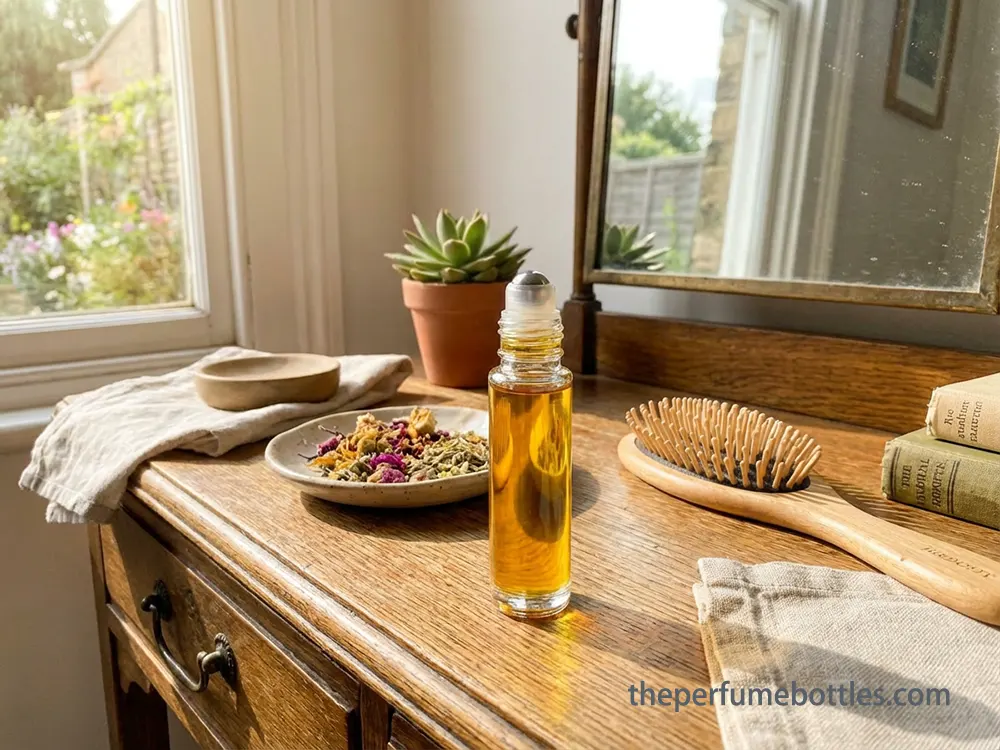
Studi Kasus: Bagaimana Vendor Botol Roll-on Kaca Mendukung Mitra AS dengan Botol Minyak Esensial Kustom
Pelajari bagaimana AS membantu vendor botol roll-on kaca AS mengatasi tantangan kustomisasi, dan mengirimkan botol roll-on minyak esensial yang sesuai dengan merek tepat waktu.
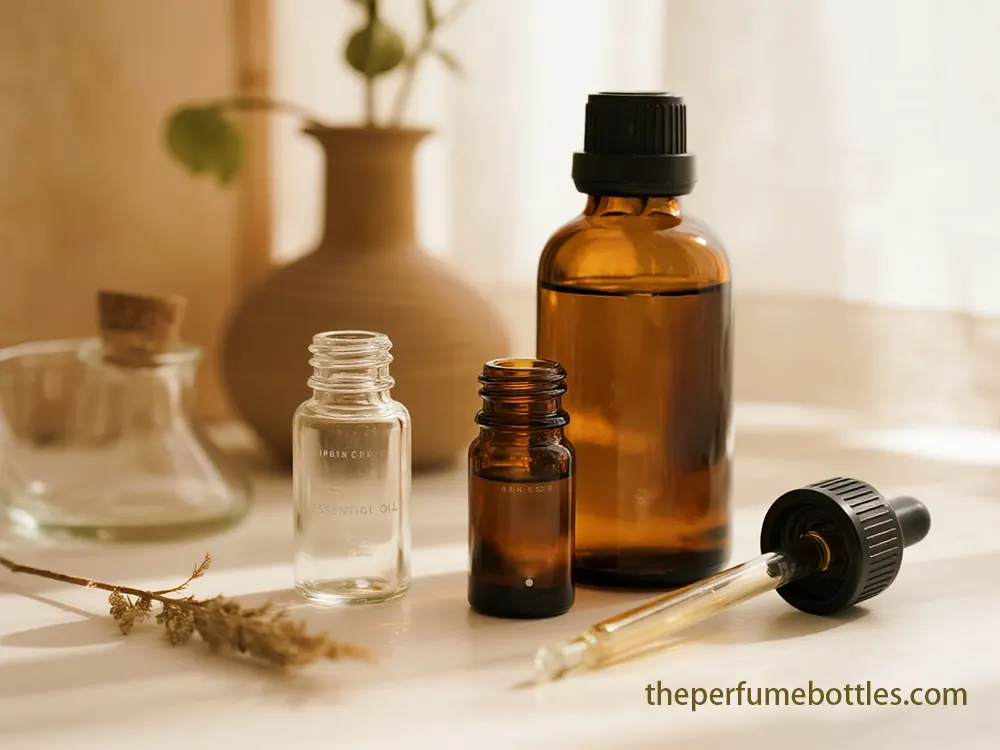
Studi Kasus: Botol Khusus untuk Minyak Esensial untuk Klien Amerika
Temukan bagaimana botol khusus untuk minyak esensial memecahkan tantangan penyegelan dan retensi aroma, memberikan
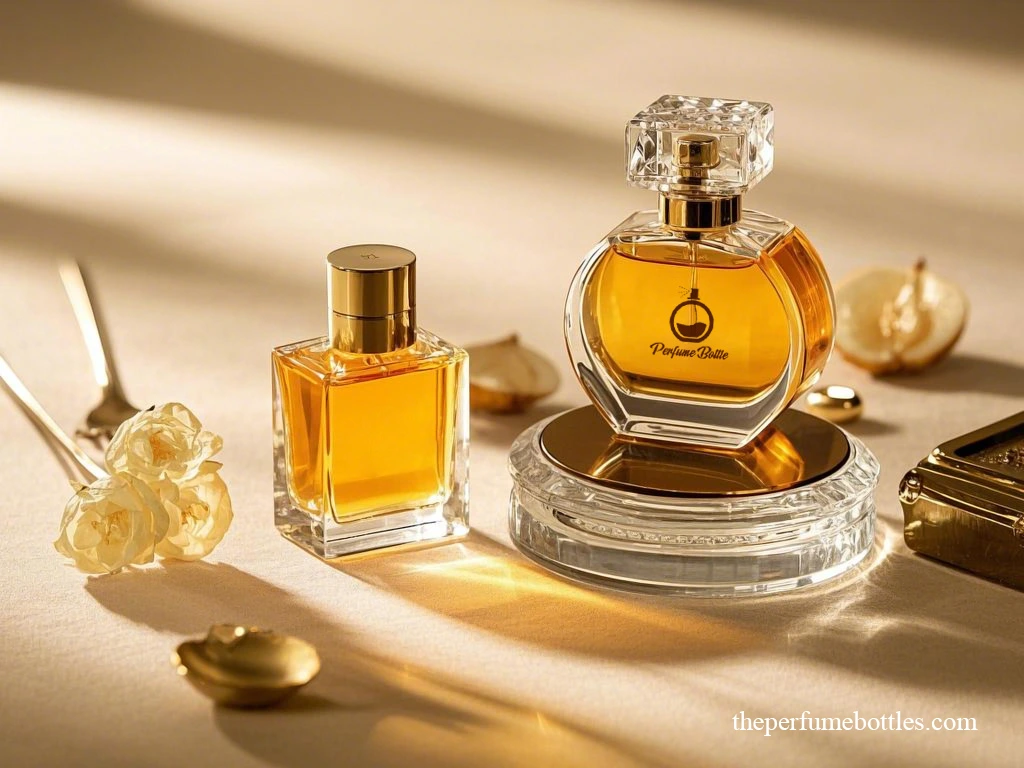
Panduan Lengkap Mengisi Ulang Botol Parfum Bekas: Dari Pembukaan Hingga Penyelesaian
Jika Anda ingin membuka botol parfum lama untuk diisi ulang, Anda perlu memilih metode yang tepat berdasarkan jenis botol parfum yang berbeda.
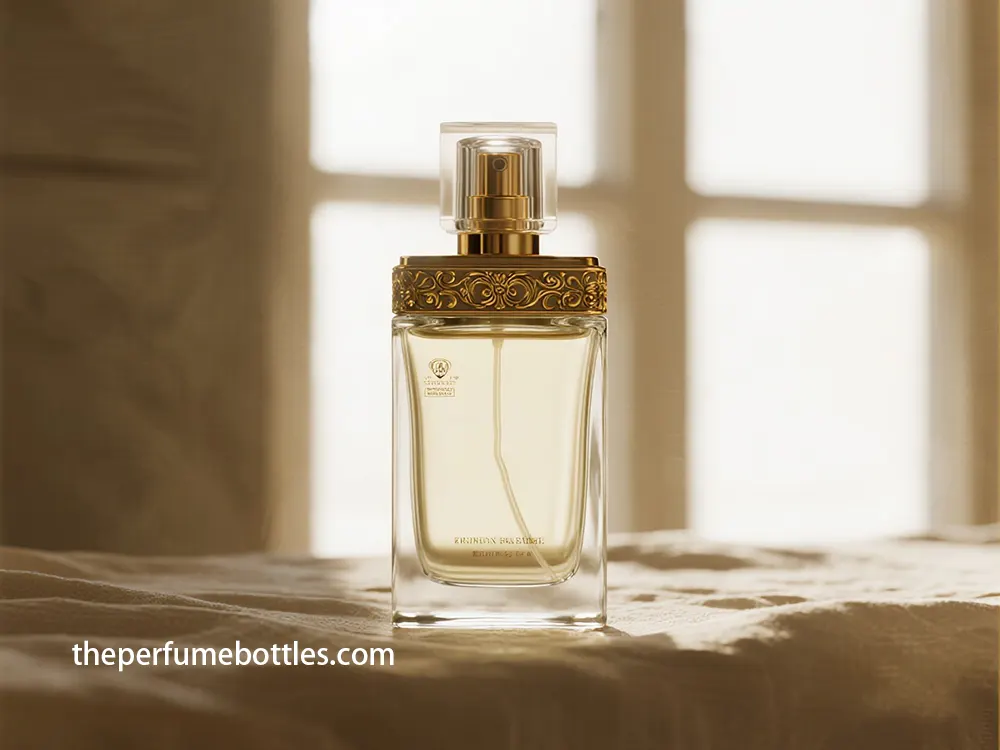
Meningkatkan Daya Tarik: Memanfaatkan Botol Parfum Mewah Grosir
Tingkatkan daya tarik lini parfum Anda dengan grosir botol parfum mewah yang strategis.
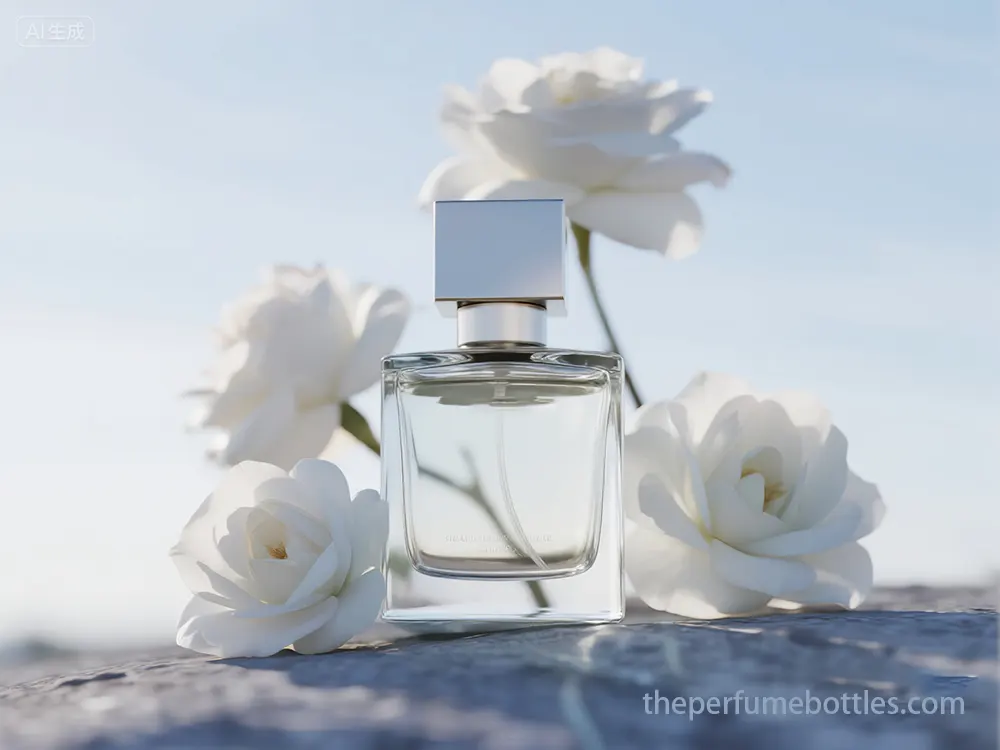
Cara Mengeluarkan Parfum dari Botol Saat Alat Semprot Rusak
Pelajari cara mengeluarkan parfum dari botol dengan metode yang aman untuk botol dengan tutup yang dikerutkan dan yang memiliki tutup ulir.
- +86 186 5178 1159
- [email protected]
- Senin-Minggu 07:00-21:00
Tag
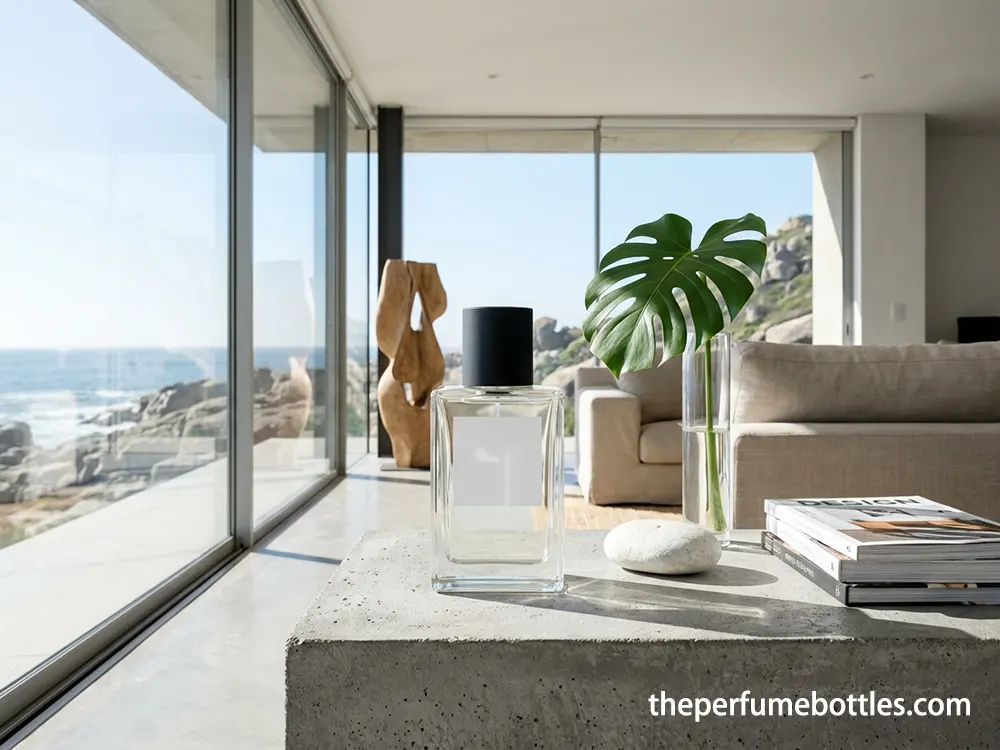
Opsi Kustomisasi Terbaik yang Ditawarkan oleh Distributor Botol Parfum Kaca Terkemuka
06/03/2026
Jelajahi pilihan kustomisasi terbaik dari distributor botol parfum kaca terkemuka. Pelajari bagaimana kami menyediakan cetakan, warna, dan hasil akhir yang unik untuk merek-merek mewah.
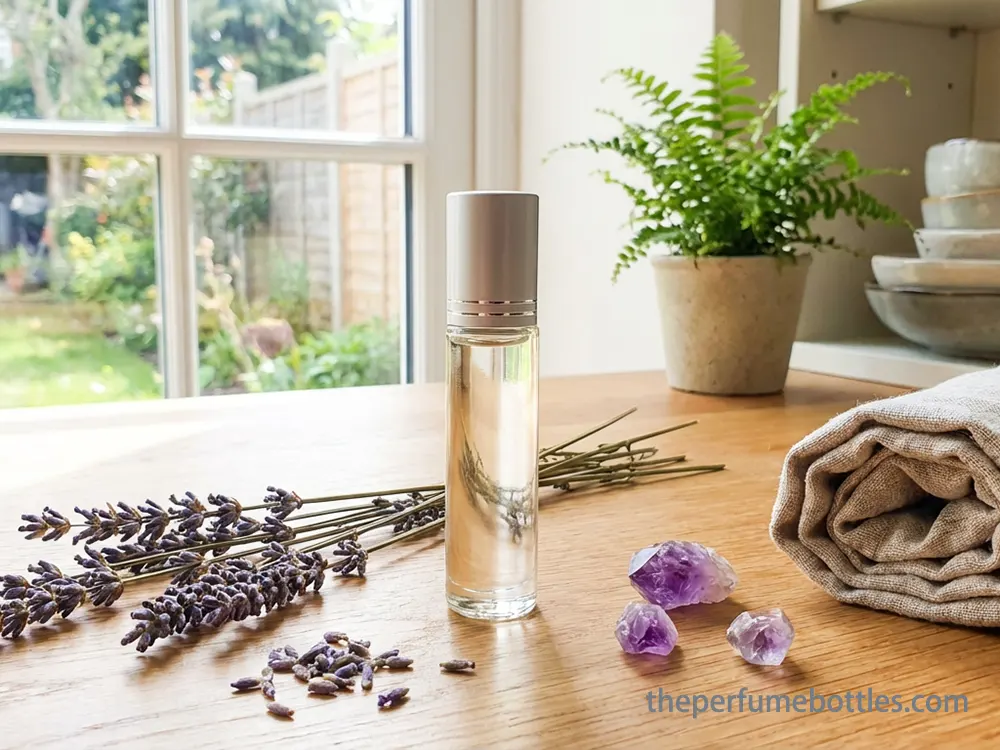
Studi Kasus: Dari Masalah yang Dialami Distributor Botol Roll-on Kaca hingga Pasokan Pabrik yang Stabil
25/02/2026
Permasalahan yang dihadapi distributor botol roll-on kaca membuat sebuah pabrik minyak di Spanyol menghubungi kami untuk memesan botol roll-on khusus yang anti bocor, pas presisi, berkualitas stabil, dan pasokan dalam jumlah besar.
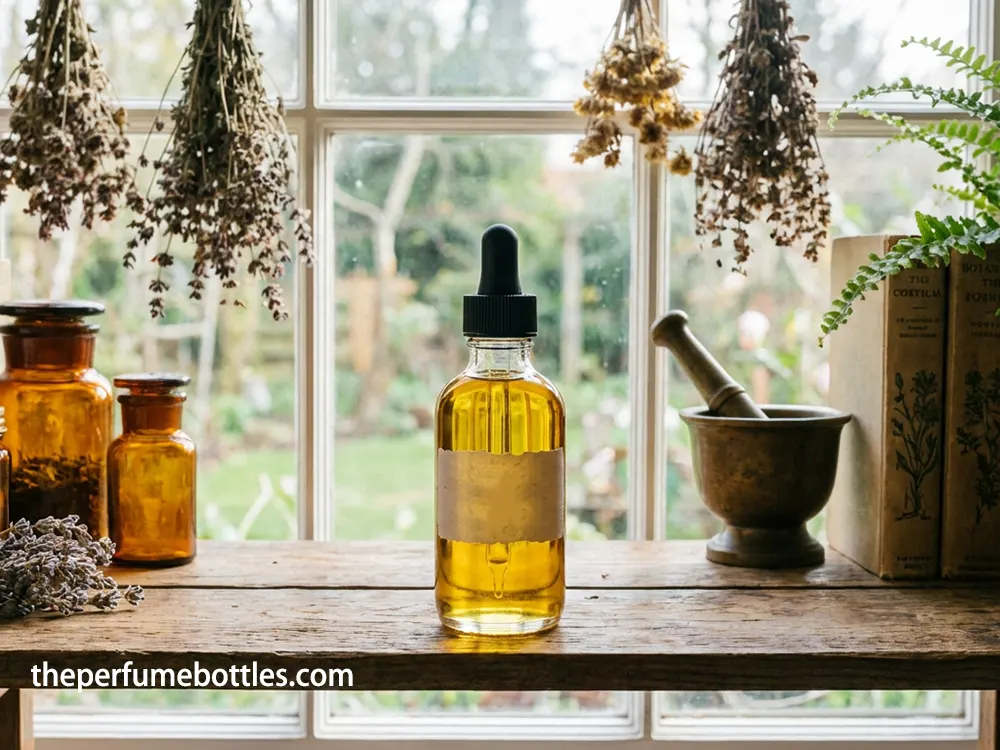
Pesanan Khusus atau Standar? Panduan untuk Pembeli Botol Tetes Kaca bagi Penjual
19/02/2026
Sedang mencari pemasok botol penetes kaca? Jelajahi panduan kami tentang kemasan kustom vs. standar. Pelajari bagaimana kami membantu pembeli mengoptimalkan biaya dan dampak merek.
Studi Kasus: Botol Parfum Kaca yang Dikustomisasi untuk Studio Parfum Niche Prancis
12/02/2026
Botol parfum kaca yang dipersonalisasi untuk studio parfum Prancis. Kami menghadirkan botol buram gradien dengan tutup kayu, meningkatkan citra merek dan daya tarik ritel.
 ID
ID  EN
EN  FR
FR  IT
IT  DE
DE  NL
NL  PL
PL  RU
RU  PT
PT  FI
FI  ES
ES  DA
DA  SV
SV  RO
RO  CS
CS  ZH
ZH  KO
KO  JA
JA  AR
AR  TR
TR  EL
EL  HU
HU  BG
BG