
Essential Oil Bottle Factory: What Business Buyers Need
Inhoudsopgave
Invoering
Price comes first. It often shouldn’t.
The first question that is generally asked by business buyers when they are purchasing etherische olie flessen, “What is the price of 10,000 bottles?” That’s a good answer, but it tells you very little about whether or not you can actually count on the supplier to provide you a consistent product at 10,000, 50,000 or 100,000 pieces.
If you are a serious buyer you should look at the whole packaging system…bottle glass, size, neck finish, dropper fit, colour, decoration, leakage performance, packaging method, production capacity, inspection procedures, shipping reliability.
That is where an fabriek voor etherische olieflessen earns its value.
A low quotation is easy to produce. Consistent bottles are harder.
And if your brand sells 10,000 units of a $20 essential oil product, a packaging defect rate of even 1% could mean hundreds of units requiring rework, replacement, or manual inspection. Why save a few cents per bottle if the resulting quality problem costs thousands of dollars?
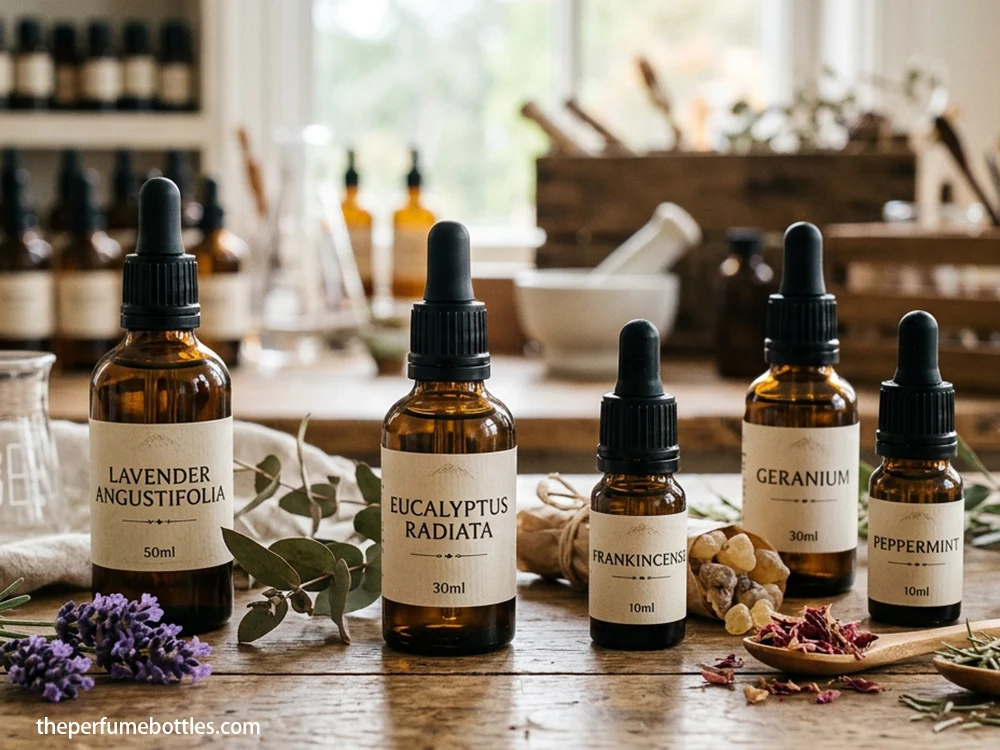
What Business Buyers Should Expect From an Essential Oil Bottle Factory
A professional factory should be able to provide more than a product catalog.
For bulk buyers, the supplier should clearly explain:
- Available bottle capacities, such as 5ml, 10ml, 15ml, 30ml, 50ml and 100ml
- Glass material and color options
- Neck finish and closure compatibility
- Dropper or reducer insert specifications
- Bottle dimensional tolerances
- Decoration and logo-printing options
- MOQ for stock and customized products
- Sample procedures
- Quality inspection standards
- Production lead times
- Exportverpakking
- Carton and pallet configuration
- Replacement policy for confirmed defects
This distinction matters because a trading company may be able to quote a bottle, while a genuine essential oil bottle manufacturer should be able to explain how that bottle is produced and controlled.
Stock Bottles vs. Custom Bottles
Not every project needs a new mold.
For a startup launching five essential oil blends, buying an existing 10ml or 15ml bottle and adding a logo can make more financial sense than developing a completely new shape. For an established brand with annual demand of hundreds of thousands of units, however, a custom bottle can justify the tooling investment if it creates meaningful shelf differentiation.
| Requirement | Voorraadfles | Stock + Custom Decoration | Fully Custom Bottle |
| Schimmelontwikkeling | None | None | Required |
| Initial investment | Laag | Low–Medium | Medium–High |
| Minimale bestelhoeveelheid | Usually lower | Medium | Usually higher |
| Shape customization | Beperkt | Beperkt | Hoog |
| Logo printing | Usually available | Ja | Ja |
| Kleuropties | Standaard | More flexible | Highly flexible |
| Development time | Short | Short–Medium | Longer |
| Best for | New products | Brand launches | Established brands |
The mistake I see most often is treating customization as one single category. It isn’t.
A printed logo, colored glass, frosted finish, silk-screened artwork, custom cap, and completely new bottle geometry all have different production requirements.
Glass Quality Matters More Than the Catalog Suggests
Two bottles can both be described as “10ml glass bottles” and still perform very differently.
For an essential oil bottle factory, buyers should ask about:
- Glass consistency: Uneven wall thickness can affect appearance, mechanical strength, and dimensional consistency.
- Bottle weight: Weight variation can reveal inconsistencies in production, although weight alone should never be treated as a complete quality test.
- Neck dimensions: This is particularly important when the bottle uses a dropper, reducer, screw closure, or other dispensing component. A beautiful bottle is useless if the closure fit is inconsistent.
- Surface defects: Bubbles, stones, cracks, chips, sharp edges, and visible scratches should be addressed through defined inspection criteria rather than subjective judgment.
- Color consistency: If the packaging is an integral part of a brand identity, such as Amber glass, it’s essential that each production batch appear the same.
Technical demands may be much greater for pharmaceutical packaging. Changing the packaging components in regulated applications often needs to be compatible and subject to documented change-control considerations, as demonstrated by FDA guidance regarding changes to glass vial and stopper container-closure systems in July 2024.
That doesn’t mean every cosmetic or aromatherapy bottle must follow pharmaceutical requirements. It means buyers should match the quality system to the intended application instead of blindly asking for “FDA approved glass.”
Don't Ignore the Dropper
The bottle is only half of the dispensing system.
A buyer ordering 30,000 bottles should evaluate the bottle together with the dropper assembly, especially when the product is sold as a measured-dose essential oil product.
Important variables include:
- Dropper bulb material
- Pipette length
- Orifice size
- Rubber/plastic compatibility
- Cap threading
- Insert dimensions
- Dispensing volume
- Seal performance
- Chemical compatibility
- Fit consistency
A supplier that can manufacture the glass bottle but cannot control the closure system may still leave you with the same problem you were trying to solve.
And this is where samples become useful.
Don’t just inspect the empty bottle. Fill it with the actual product—or a representative formulation—and test the complete closure system.
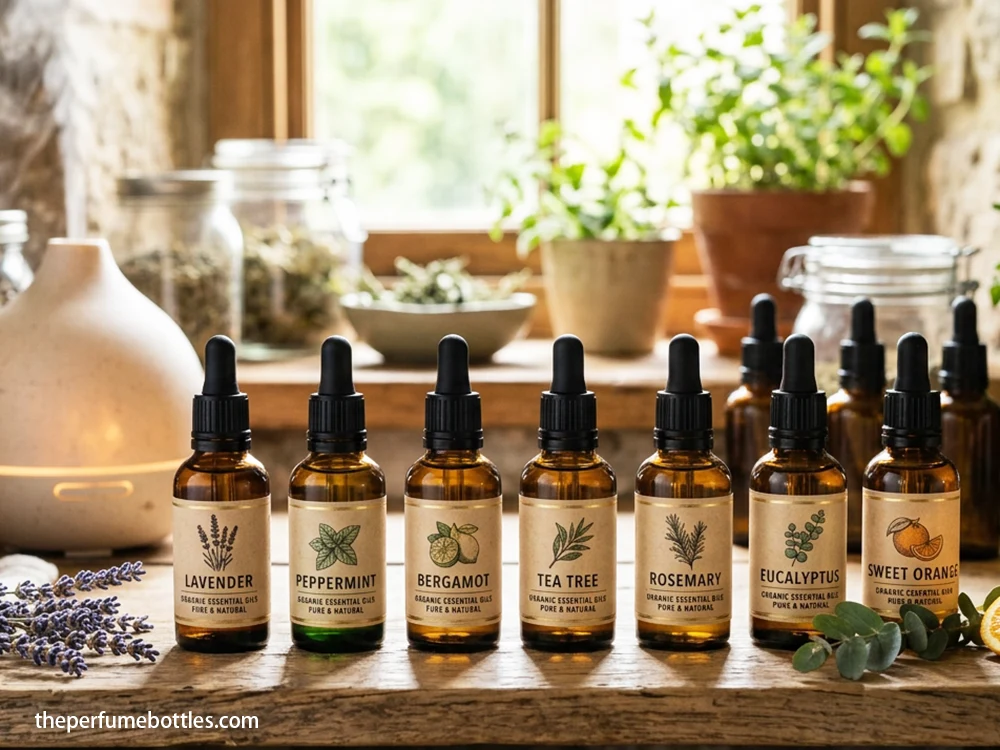
Essential Oils Can Expose Weak Packaging
Essential oil formulations vary significantly. Their chemical composition, concentration, viscosity, and interaction with packaging components can differ from one product to another.
So a bottle that performs perfectly with one formulation should not automatically be assumed to perform identically with another.
We recommend testing the complete packaging system under realistic conditions:
- Fill the bottle with the intended formulation
- Install the final dropper or closure
- Store samples vertically and horizontally.
- Conduct repeated opening and closing tests
- Check for leakage around the neck
- Inspect the closure after storage
- Check labels and decoration after exposure
- Repeat testing after temperature changes where relevant
For pharmaceutical packaging, regulators explicitly recognize that container-closure components can affect product quality, which is why packaging changes may require risk-based assessment.
The lesson for general B2B buyers is simple: test the bottle with the product, not just with water.
MOQ Is Not Just a Number
A factory may quote:
- 1,000 pieces for stock bottles
- 3,000 pieces for logo decoration
- 5,000–10,000 pieces for special colors
- Higher quantities for custom molds
But MOQ should always be separated by production requirement.
A buyer asking, “What is your MOQ?” without specifying the customization level is asking an incomplete question.
Instead, ask:
What is the MOQ for stock bottles, logo printing, custom glass color, custom closure, and a completely new mold?
Those are five different commercial scenarios.
For brands with several scents or SKUs, this distinction can materially change the purchasing strategy. You may be able to consolidate different products around one bottle platform while changing labels, caps, or printed artwork.
That reduces inventory complexity.
How to Compare Essential Oil Bottle Factories
I would score suppliers using a weighted model rather than choosing the cheapest quotation.
| Evaluation Factor | Suggested Weight | What to Check |
| Glass quality | 0.2 | Defect control, dimensional consistency, appearance |
| Compatibiliteit van de sluiting | 0.15 | Neck finish, dropper fit, leakage |
| Aanpassing | 0.1 | Printing, frosting, color, caps, molds |
| MOQ flexibility | 0.1 | Stock vs. customized MOQ |
| Quality control | 0.15 | Inspection process, sampling, records |
| Productiecapaciteit | 0.1 | Monthly capacity and peak-season planning |
| Packaging & shipping | 0.1 | Cartons, pallets, cushioning, loading |
| Lead time | 0.05 | Sample and mass-production schedules |
| Communicatie | 0.05 | Technical response and documentation |
This isn’t an industry-standard scoring formula. It’s a purchasing framework.
The point is to prevent one attractive unit price from dominating the entire decision.
Bulk Shipping Is a Quality Issue Too
Here’s the uncomfortable part.
A bottle can leave the factory in perfect condition and arrive at your warehouse damaged.
Glass packaging requires protection throughout transportation. The United Nations Model Regulations address packaging construction, testing, and transport procedures for dangerous goods, and their 2025 Revision 24 incorporates updated provisions and references to packaging requirements.
For international shipments, buyers should therefore ask the factory about:
- Inner dividers
- Carton strength
- Palletization
- Shrink wrapping
- Corner protection
- Drop protection
- Container loading
- Carton quantity
- Damage inspection procedures
UNECE transport guidance also specifically recognizes that fragile inner packagings such as glass may require suitable cushioning and protection within outer packaging.
In other words, packaging engineering is part of bottle sourcing.
A factory that produces excellent glass but ships it poorly isn’t an excellent supplier.
What Should You Ask Before Placing a Bulk Order?
Before sending a purchase order, I would ask an essential oil bottle factory for these details:
Product specifications
- Bottle capacity
- Height and diameter
- Bottle weight
- Halsafwerking
- Glass type/color
- Compatibiliteit van de sluiting
Aanpassing
- Printing method
- Printing colors
- Frosting
- Coating
- Custom glass color
- Custom mold requirements
- Commercial terms
Minimale bestelhoeveelheid
- Sample cost
- Tooling cost
- Production lead time
- Betalingsvoorwaarden
- Reorder lead time
Kwaliteit
- Inspection method
- Defect classification
- Dimensional tolerance
- Lektest
- Sample approval process
Logistiek
- Carton quantity
- Pallet quantity
- Shipping configuration
- Exportervaring
- Damage/replacement policy
Don’t accept vague answers on the technical points.
Veelgestelde vragen
What should I look for in an essential oil bottle factory?
An essential oil bottle factory should demonstrate consistent glass quality, compatible closures, defined inspection procedures, customization capabilities, realistic MOQs, stable production capacity, and reliable export packaging. Business buyers should also verify samples using their actual formulation before approving large-scale production.
Which material makes the best bottles for essential oils?
Glass is a preferred material for essential oil containers since it is rigid, non-porous and is manufactured in protective colors like amber. The selection of the appropriate material still relies on the formulation, dispensing system, regulatory market, and the storage conditions.
What does an essential oil bottle manufacturing company expect for MOQ?
MOQ is the minimum order quantity that the supplier needs for the specific production configuration and depends on the choice of stock bottles, decoration, special colours, custom closures and/or a new mould. Generally lower quantities than fully custom packaging are possible with stock products.
How do I know if an essential oil bottle supplier is trustworthy to order from?
Supplier verification is the process of verifying physical samples, technical specification, production capacity, quality control process, customization capabilities, MOQ, lead time, packaging process and references or exported experience of the supplier before entering into bulk production. Where possible, a sample of the product should be used when evaluating.
Can customization of bottles with my logo be done at an essential oil bottle factory?
Indeed, there are several glazen verpakking suppliers that will be able to provide stock bottles that are customized with screen printing, coating, frosting, labeling or custom bottles with a customized closure. Logos are typically easier to decorate that creating a bottle mold and so buyers should request that they supply MOQ, artwork, sampling and manufacturing requirements separately.
How do the essential oil bottles need to be tested prior to bulk production?
Essential oil bottles should be tested as a whole package system, including the bottle, the closure, the dropper and the product formulation. Prior to approving mass production, the buyer should test for leaks, consistency in dispensing, fit of closure, durability of decoration, and storage performance.
Is there a correlation between bottle price and supplier?
No. A lower bottle price is only a lower quoted unit cost; it does not prove that the glass is more consistent, the closure is more effective, that there is increased protection of the product inside, that the production is more reliable, or that there is a better control of defects. B2B buyers should look, not just at the lowest price quotation, but at total landed cost and quality risk.
Choose for the Factory, Not Just the Bottle
The good essential oil bottle factory would make your procurement work much easier, rather than make your team have to deal with the manufacturing issues after each order.
The technical aspect of the supplier’s relationship is the most solid; we believe it begins with technical clarity: confirm the bottle, test the closure, approve the sample, clarify the quality standard, discuss the MOQ and only start bulk production after that.
If you are a business looking to buy wholesale bottles of essential oils, it’s not enough to just find a bottle you like in the catalog.
The challenge is to identify packaging that is reliable throughout scale-up.
Searching for an oil bottle factory for a next bulk project? Contact us with your bottle size, the number of bottles you’ll be needing, closure options, and customization options, and we’ll help you determine which packaging solution is right for you.