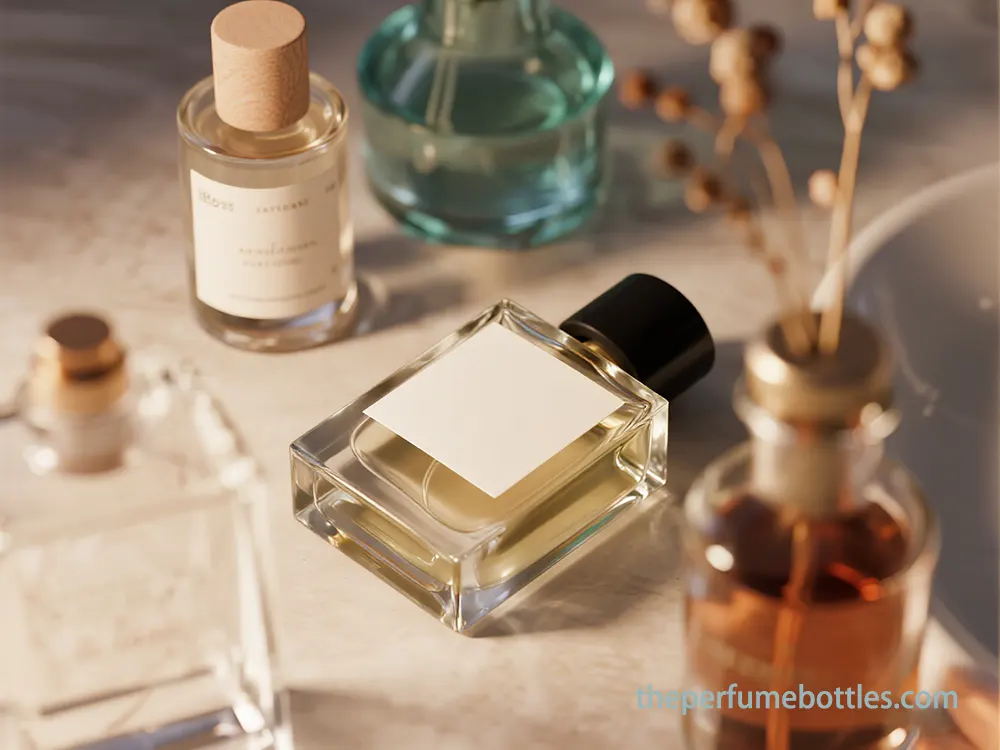
A Strategic Framework for Selecting a Glass Perfume Bottles Supplier
目录
Choosing a 玻璃香水瓶。 香水品牌的供应商是一个决定性的战略伙伴关系,它定义了业务在速度、销售、品牌资产和盈利能力方面的增长。瓶子是与消费者的第一次接触,也是香水的保护者。本报告将供应商关系视为竞争优势的来源,超越单位成本,提供模型以使供应商能力与品牌抱负、供应链风险缓解和可扩展性保证保持一致。主要思想很简单:一个好的合作伙伴是增长加速器;一个坏的合作伙伴是沉重的锚。本手册帮助人们弄清楚如何得出这个关键结论。
第1节:瓶子作为战略增长杠杆
香水瓶是直接影响品牌增长的商业工具之一。误解其战略重要性将付出沉重代价。玻璃香水瓶的战略供应商不仅提供玻璃,还赋予品牌概念以力量。
加快上市速度
在迷人的香水世界里,时间就是金钱,延误意味着错过零售季节并失去先发优势。您的供应商在运营方面的效率将决定产品上市的速度。拥有现成模具、内部装饰和高效工具的合作伙伴可以在几个月内而不是一年多完成开发工作,从而为品牌提供及时响应市场趋势并从新机遇中获益的机会。
推动销量和货架吸引力
瓶子是您品牌最不可阻挡的“慈善工作者”。它的特点——重量、透明度、装饰和瓶盖——在香水被闻到之前就明确地预示了其价值。一个出色的瓶子会吸引消费者,让他们熟悉,并且很可能成为购买决定的关键。作为品牌承诺的具象体现,其标准与感知价值成正比。
建立长期品牌资产
气味和瓶子之间的关联对于像香奈儿5号这样的标志性产品来说非常强烈。这样的瓶子是品牌资产,会随着时间增值。独特的专有模具是抵御竞争对手的防御护城河,从而创造出视觉上可识别的轮廓,增强品牌回忆并加深消费者参与度。

第2节:供应商选择框架:使能力与抱负保持一致
选择玻璃香水瓶供应商必须考虑其能力与品牌阶段和目标的关系。决策矩阵可以描述权衡并揭示完美的合作。首先,供应商可以分为三个不同的群体或原型。
供应商原型和品牌目标
识别供应商的运营重点意味着了解哪一个最适合您的需求。
- 现货与速度专家: 提供大量预制瓶。它们的主要优势是速度和可及性,以及低最小起订量(MOQ),非常适合初创企业、限量版或市场测试。
- 定制工匠: 专注于复杂、专利设计的精湛工匠。他们为奢侈品或小众品牌供货,这些品牌对独一无二的瓶子不容妥协,但价格和所需时间更高。
- 综合规模合作伙伴: 就像 Vesseluxe,,这些供应商通过将现货选项与定制设计相结合,提供完整的端到端解决方案。它们的强大之处在于能够提供从小规模发布到百万单位推广的顺畅途径。
定制与现货决策矩阵
决定选择现货瓶还是定制模具,需要权衡即时限制与长期抱负。
| 品牌阶段 | 主要目标 | 最佳解决方案 | Key Considerations |
|---|---|---|---|
| Startup / Pre-Launch | Speed-to-Market & Cash Preservation | Stock Bottle | Low MOQ, minimal upfront cost, proven design. Focus investment on fragrance & marketing. |
| Emerging / Growth | Brand Differentiation & Market Share | Modified Stock or Entry Custom | Use stock mold with unique decoration, or invest in a proprietary cap/collar. Balances cost and uniqueness. |
| Scaling / Established | Building Brand Icon & Defensibility | Fully Custom Mold | High tooling investment, longer lead time, but creates a unique, ownable brand asset with high equity. |
Evaluating the Trade-Offs
Choosing a stock solution means getting speed and low financial risk but at the cost of little differentiation. On the other hand, a fully custom solution offers the utmost brand expression but demands a large sum of capital and a considerable amount of time. An integrated partner is capable of closing that gap with “modified stock” solutions—a standard bottle with unique decoration or a proprietary cap—thus providing a practical way for differentiation.
Section 3: The Economic Calculus of Sourcing: Balancing Unit Cost, Brand Equity, and Speed
A resourceful sourcing strategy figures out Total Cost of Ownership (TCO), besides just per-unit price. It is hardly ever the case that the cheapest glass perfume bottles supplier is the most profitable one. Monetary models should incorporate the hidden costs of bad quality and delayed time to market.
Modeling the Impact of MOQs and Tooling
MOQs and tooling represent the most significant parts of the upfront costs. A high MOQ may come with a low unit price but it also immobilizes working capital. The provision of flexible MOQs enhances the company’s agility and cash flow. The decision to invest in tooling for a custom mold is a capital expenditure, the return of which is measured in brand equity, pricing power, and market defensibility.
The Opportunity Cost of Delays
For instance, a delay of three months in production might imply missing the holiday season and therefore incurring losses in revenues, market momentum, and the possibility of getting delisted by retailers. Thus, one can say that a supplier of glass 香水瓶 who is dependable and has a good record of on-time deliveries acts as a form of revenue insurance.
Gross Margin Protection
The real cost of a bottle should include the unit price as well as the cost of defects. To give an example, a 5% defect rate on an order of 10,000 units results in 500 units that cannot be used. The loss in question includes that of the bottle, the fragrance, the components, as well as labor. Therefore, a partner who implements strict Quality Control (QC) procedures can be seen as protecting the gross margin because they assure a higher yield of saleable goods.
Section 4: De-risking Growth: The Strategic Value of Integrated Services
When a brand scales up, a supplier with integrated services is converted into a strategic partner, thus bringing down operational, regulatory, and financial risks. These are the main factors of a business framework that is both resilient and scalable.
In-House Design and Engineering Consultation
The themed concept on the mood board might be something that your average consumer won’t see or use. A strategic partner not only imparts design-for-manufacturing (DFM) skills but also provides the advice on the parts of the product that can be changed visually to a certain extent while still achieving a high yield of production and compatibility with filling lines. By the partnership method, the company is avoiding tooling mistakes which are expensive to double.
Navigating the Maze of Regulatory Compliance
Besides the others, REACH and California’s Proposition 65 are extremely stringent regulations that impact the globally traded fragrance market and their materials such as glass, inks, and coatings. A knowledgeable glass perfume bottles supplier is the one who is always implementing and updating all the documentation, which is necessary for the opening of international markets and the protection of the brand against recalls.
Advanced Quality Control and Secondary Packaging
Quality control at a holistic level does not allow compromise. The leading suppliers carry out a multi-stage operation, which includes:
- Dimensional Analysis: The main purpose of this is to be certain that the bottles in question are in compliance with the very precise technical standards that are necessary for the correct fitting of the caps and the pumps.
- Performance Testing: Testing the product under different scenarios and conditions in most instances creates the bases for this product’s reliability. One of the ways verification can be done is by subjecting the product to vacuum leak tests, impact tests, and product compatibility tests.
- Aesthetic Inspection: Both human and automatic cosmetic inspection for defects.
Besides that, a supplier who smoothly handles the secondary packaging stage in the production process guarantees not only the straightening of all the parts thus lightening the supply chain but also the provision of a sleek unboxing experience to the end-user.

Section 5: Future-Proofing the Supply Chain: Scalability and Sustainability
Choosing a partner rightly should not only be about the support provided right now but also the benefit that is going to be derived by the brand in the long run. Hence, among the criteria for decision making, there must be considered a supplier’s ability to escalate and their commitment to sustainability, which is an essential feature of any up-to-date brand.
Planning for Seamless Scalability
A question that you might want to pose to the prospective supplier is ‘Could you please explain how the switch from 10,000 to 1 million units takes place?’
Not only a scalable partner is aware of and prepared for the situation but also they demonstrate it by their technology roadmap where they gradually move from semi-automatic to fully automated lines for high-volume consistency. Consequently, the risky process of changing suppliers halfway through the growth stage is being averted.
The Growing Imperative of Sustainability
The world today is a consumer-driven society where consumers are demanding less environmental impact of products. Therefore, the packaging of your product turns out to be the most conspicuous and most communicative aspect of your brand’s values. A partner who is ahead in thinking is, therefore, a perfect match in not only building but also in delivering a genuine and believable sustainability narrative.
- 可持续材料: Decorating glass that has a high Post-Consumer Recycled (PCR) content and encouraging the use of water-based sprays and organic, bio-based inks.
- Sustainable Processes: Steps to be taken in order to make the factory more energy-efficient, such as using energy from renewable sources, implementing water recycling in a closed loop system, and making the furnace more efficient to lower carbon dioxide emissions.
Section 6: Strategic Recommendations and Outlook
The way to accomplish this is by a very intense and thorough examination or vetting process centered on the innovation of the packaging of the future. The decision of the supplier of glass perfume bottles has a far-reaching influence on the brand’s ecosystem.
A Checklist for Vetting Potential Suppliers
Examine the factors that contribute to quality by making use of this checklist:
- Quality & Compliance Certifications: Ask for proof in the form of ISO 9001, social compliance audits (SMETA), and REACH/Prop 65 documentation.
- QC Process: Find out through checkpoints, technology, and their acceptable quality limit (AQL).
- 可扩展性: Talk about strategies, technology, and request case studies of scaled brands.
- Design & Engineering Team: Introducing a design project to analyze their teamwork method.
- Sustainability Roadmap: Inquire about 3-5 years goals regarding PCR content, energy consumption, and new material usage.
- Communication & Project Management: Estimate openness and response during the evaluation process.
Speculative Outlook: The Future of Fragrance Packaging
The fragrance packaging sector is prepared for revolutionary ideas. Collaborate with partners who are investigating these areas:
- 智能包装: NFC or RFID labels placed on the bottle or cap for product authentication and exclusive digital content.
- Advancements in Lightweighting: New glass formulations creating lighter, stronger bottles, thereby lessening material use and the carbon footprint of shipping.
- Hyper-Personalization and Modularity: Platforms that allow on-demand digital printing and modular designs where consumers can select the components.
By selecting your glass perfume bottles supplier you are, in fact, deciding your trajectory. A strategic, long-term perspective assists brands in acquiring a partnership that not only ensures the delivery of a beautifully crafted bottle but also acts as a cornerstone for lasting success.